
Last updated: 7 January 2026
AI Mode SEO isn’t a new layer added to traditional optimisation. It’s a change in how relevance is evaluated, selected, and surfaced.
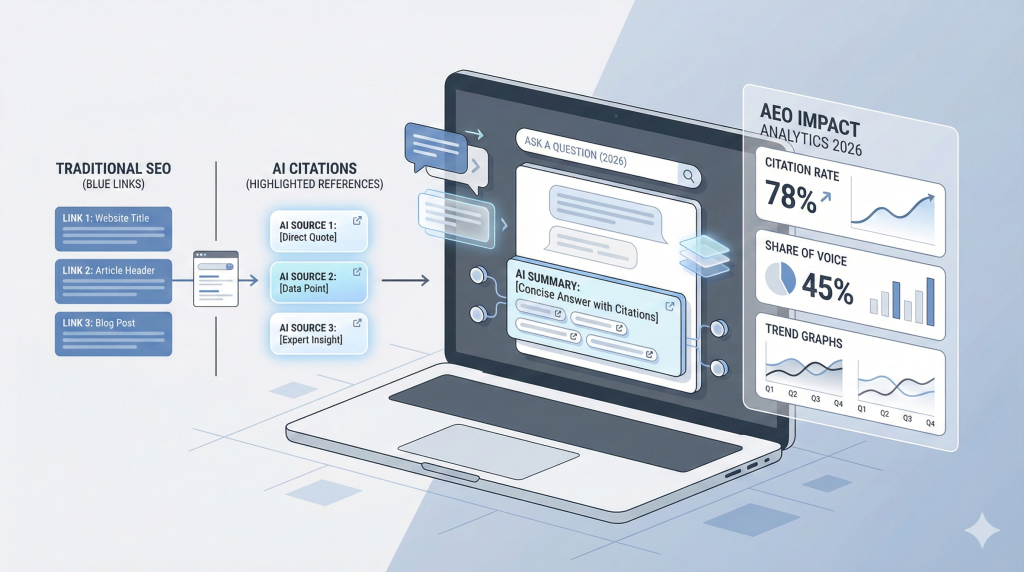
Ranking a page is no longer the end goal. In AI-driven search, content must be selected, trusted, and cited inside generative answers. That requires a different way of structuring, writing, and measuring SEO.
This guide breaks down what actually matters for AI Mode visibility in 2026 — without hype or theory.
1. Foundations Still Matter (Non-Negotiable)
AI Mode still runs on Google’s core index. If classic SEO fails, AI Mode visibility fails with it.
- Pages must be crawlable and indexable
- Key pages must not be orphaned
- URL structure should reflect topics, not keywords
- Pages must load quickly and reliably
- Structured data should exist where it adds clarity
AI does not fix broken technical SEO. If your site isn’t trusted at crawl and index level, it won’t be trusted at answer level.
2. Passage-Level Optimisation Is the Real Shift
AI Mode retrieves passages, not full pages. Each section must stand on its own.
- Content is split into clear, self-contained sections
- Each section answers one intent or question
- Paragraphs make sense when read in isolation
- Headings clearly describe what follows
- Long, unfocused blocks of text are avoided
If a paragraph can’t be lifted and used on its own in an AI answer, it’s too vague or too bloated.
3. Query Fan-Out Coverage
AI Mode rarely answers one query. It expands it into a series of implied follow-ups.
- What something is
- How it works
- When it’s appropriate
- Alternatives and comparisons
- Benefits and limitations
- Common follow-up questions
One strong page should satisfy multiple inferred intents — not just a single keyword.
4. Semantic Relevance (Not Keyword Matching)
AI Mode relies on meaning alignment, not keyword density.
- Natural language over forced repetition
- Related concepts and entities included naturally
- Content written to explain, not just rank
- No thin or overlapping pages internally
- Each page has a clearly defined purpose
Keyword optimisation hasn’t disappeared — meaning has simply become the dominant signal.
5. Relevance Engineering (Modern Optimisation)
This replaces classic on-page “SEO tweaks”.
- Content maps to real user problems
- Reasoning is explicit (cause → effect → outcome)
- Assertions are explained, not claimed
- Vague marketing language is removed
- Each section outperforms competitors on clarity
AI Mode evaluates relevance comparatively. You don’t need to be perfect — you need to be clearer than the alternatives.
6. Citation Readiness
Being used matters more than being ranked.
- Statements are factual and verifiable
- No exaggerated or unprovable claims
- Brand names appear naturally in authoritative statements
- Pages read like sources, not sales pages
If AI doesn’t trust the information, it won’t cite it — regardless of rankings.
7. Measurement Has to Change
Rankings and clicks alone no longer explain performance.
- Visibility inside AI answers matters
- Brand mentions and citations matter
- Impressions often rise while clicks fall
- Conversions shift toward branded and direct traffic
AI Mode success is about influence across the journey — not last-click attribution.
Final Thought
AI Mode SEO is no longer about ranking pages. It’s about engineering relevance so your content is trusted, selected, and cited inside generative answers.
If you want a second opinion on how your site or content is likely to perform in AI-driven search — or you want help restructuring pages for passage-level visibility — I’m always happy to talk it through.