
Last updated: 8 January 2026
With everything that happened across search in 2025, it was easy to think local SEO would be turned upside down, along with everything else.
In reality, local search has been far more sheltered than most people expected.
That’s not because AI hasn’t advanced — it clearly has — but because local search is rooted in things that are much harder to disrupt: geography, real-world services, and physical presence.
Why Local SEO Has Been Less Affected by AI Changes
The big AI-driven changes we’ve seen across Google Search have mostly impacted informational and research-led queries.
Local search works differently.
If you’re a plumber in a specific town, you’re still a plumber in that town. Google still needs to show businesses that can physically serve a location, at the moment someone needs them.
- Maps still rely on proximity
- Local results still rely on verified locations
- Service businesses still need to exist in the real world
Local search is anchored in reality. AI can summarise information, but it can’t move a business closer to the user.
Because of that, Google Maps and local organic results remain relatively stable compared to wider organic search.
What AI Is Influencing (Without Replacing Local Search)
That doesn’t mean AI has no influence at all.
What’s changing is how information about local businesses is summarised and referenced, not whether local businesses appear.
AI assistants are increasingly used to:
- Understand service options
- Clarify terminology
- Compare types of providers
- Shortlist what to look for
But when it comes to acting — booking, calling, visiting — users still end up back in Google’s local results.
AI may influence the decision, but Google still facilitates the action.
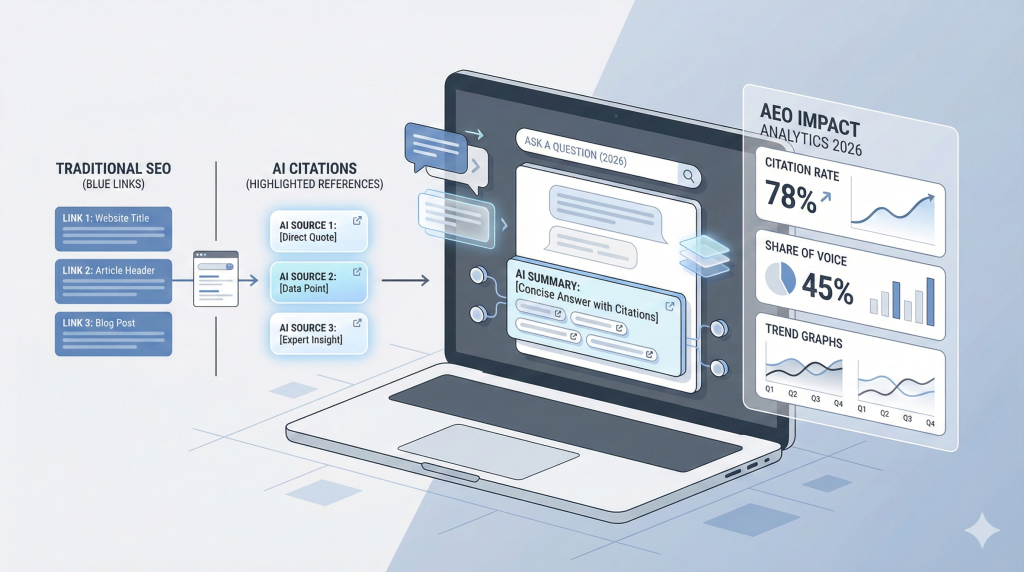
Why Citation-Ready Content Matters More Now
One area that has changed is how content is used.
Local websites are no longer just ranking assets — they’re source material.
If your content clearly explains:
- What services you offer
- Where you operate
- How you work
- What makes you different
…then it’s far more likely to be referenced or cited by AI assistants like ChatGPT, Gemini, or Perplexity.
Local SEO content doesn’t need to be clever — it needs to be clear, factual, and easy to reuse.
This doesn’t require big budgets or complex strategies. It’s mostly about getting the fundamentals right.
Local SEO Still Comes Down to Basics (Not Budgets)
Local SEO has never been a high-budget channel for most businesses — and that hasn’t changed.
Success still comes from:
- Consistent business details
- A properly optimised Google Business Profile
- Clean, accurate service pages
- Real reviews and engagement
If those are in place, AI changes don’t suddenly push you out of the picture.
AI doesn’t reward complexity in local SEO — it rewards consistency.
Competition Still Decides the Ceiling
Once the basics are covered, local SEO works the same way it always has.
In low-competition areas, doing the fundamentals well is often enough.
In more competitive areas, it comes down to authority.
- Stronger brand recognition
- Better reviews
- Wider coverage across the web
- In some cases, higher-quality backlinks
AI hasn’t removed competition — it’s just made the signals cleaner.
When everyone has the basics right, authority is what separates positions.
What I’m Seeing in 2026 (Right Now)
Looking purely at Google results in 2026:
- Local map visibility remains stable
- Organic local pages still matter
- AI hasn’t replaced Google Maps
- Local intent still drives results
The biggest risk I see isn’t AI itself — it’s neglect.
Businesses that haven’t kept listings, content, or reviews up to date are the ones feeling pressure.
Local SEO hasn’t changed direction — it’s just become less forgiving.
Final Thoughts
Local search sits in a different category to most of the AI-driven disruption we’ve seen elsewhere.
As long as businesses:
- Exist in a real location
- Serve a defined area
- Keep their information accurate
- Create clear, usable content
…local SEO remains one of the most stable areas of search.
AI may change how information is summarised, but it hasn’t changed the fundamentals of being found locally — at least not yet.
If you want a quick sanity check on how your local setup looks in 2026 — from your Google Business Profile to your service pages — I’m always happy to talk it through.